Playing Ransom Notes with seven or more people
The box says three to six, and then the whole party shows up. Here is how big tables actually play, and what the shelf offers when the room keeps growing.
Teams are the native answer
The base game handles a crowd without buying anything: fold extra players into teams. Each team shares one metal card and one magnet pile, builds one note together, and lives with the compromise. A table of twelve plays comfortably as four teams of three, and the between-team trash talk scales better than any component could.
Team play changes the texture of a round. Solo, the comedy comes from your own poverty of words. In a team, it comes from watching someone fight for a magnet the rest of the team has voted off the card.
When everyone wants their own card
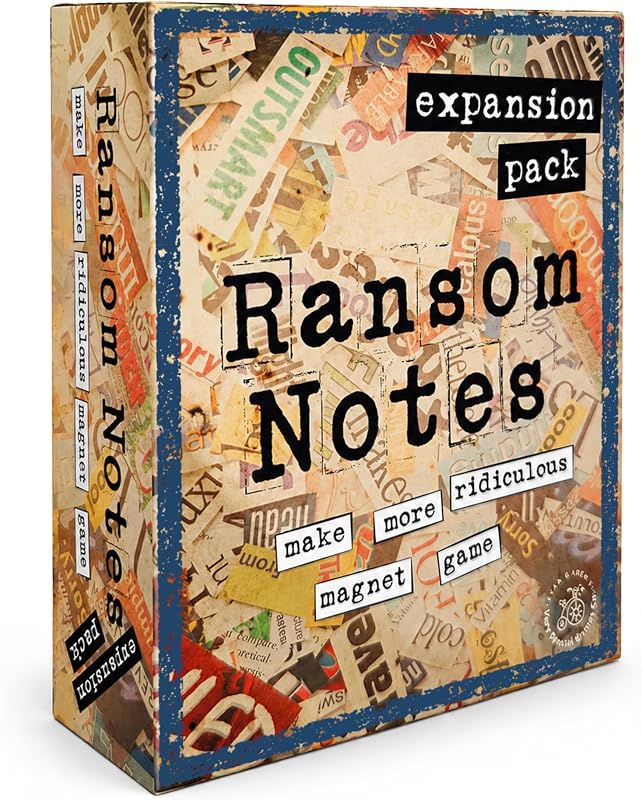
Some players hate sharing, and we respect that. Expansion Pack One adds four extra magnet trays and stretches the game to ten individual players, along with 198 prompts the room has never heard. If your gatherings regularly pass six people, this is the pack doing the heavy lifting.
Judging a big room
Past eight players, reading every note aloud stretches the round, so borrow from the Party Gamer variant: submissions go to the judge face down, and the judge reads them out in one continuous performance. It keeps the room listening instead of rehearsing, and anonymous notes let the shy seats go darker than they would under their own name.
Stocking a shelf for a crowd
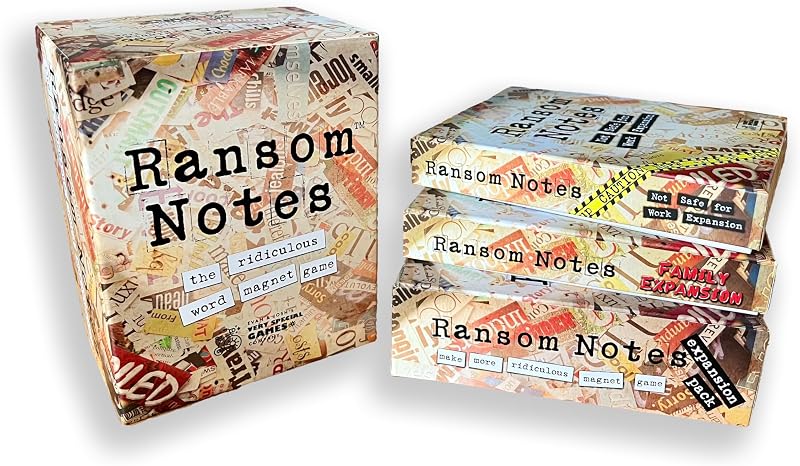
Big rooms burn through prompts fast; a deck that lasts a family of four a year of game nights can be exhausted by a party crowd in a season. The Full Collection bundle stacks the base deck with all three packs, which in a crowd is less a luxury than a supply line.